
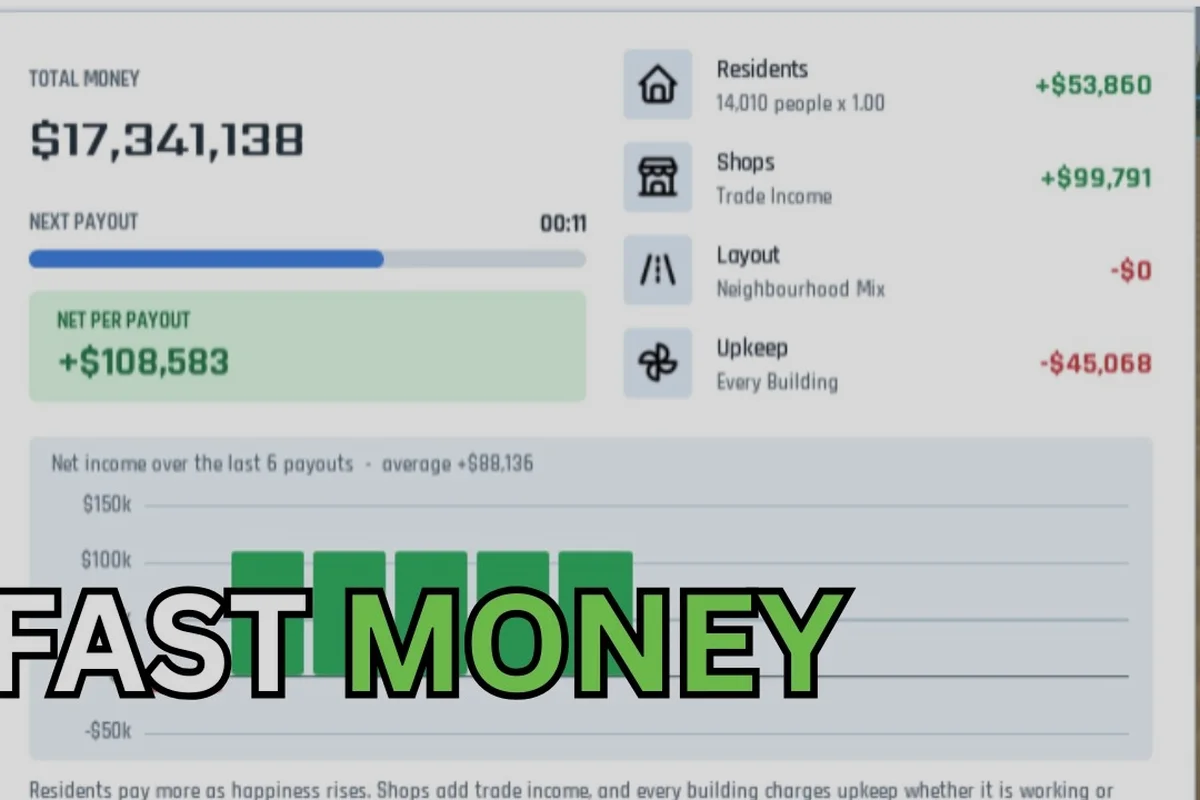
A strong economy decides whether your city survives the first raid or collapses under its own weight. The Build and Conquer fastest money method in the V0.1 beta revolves around a simple loop: build commercial zones to generate income, expand housing to grow your workforce, and keep citizens happy enough to pay taxes. This guide breaks down the exact buildings, upgrade priorities, and treasury habits that let you afford a full military without stalling your expansion. Once your economy is stable, you’ll want to pair it with the offensive positioning and timing covered in our Build And Conquer How To Use Military Base so your funded army actually wins territory instead of sitting idle.
The Core Income Engine: Commercial Zones
Commercial buildings are the primary revenue source in Build and Conquer, and understanding how they scale is the first step toward a sustainable treasury. Shops, supermarkets, and malls each produce income at different rates, but they also demand different amounts of workers and space. According to community testing from the V0.1 beta, shops are the cheapest entry point, while malls deliver the highest income per tile once you can afford their upkeep.
The key insight is that commercial income scales with population density. A shop surrounded by apartments generates more revenue than a shop placed in a low-density residential area. This means your zoning layout directly impacts your income, which is why experienced players recommend clustering commercial zones near high-population blocks.
| Building Type | Income Tier | Worker Requirement | Best Use Case |
|---|---|---|---|
| Shop | Low | 2 workers | Early game, low-cost expansion |
| Supermarket | Medium | 5 workers | Mid-game backbone income |
| Mall | High | 12 workers | Late-game density scaling |
The table above reflects community-reported figures from creator testing in October 2026, so treat exact numbers as approximate. What matters more than raw income is the ratio of income to worker cost, because every worker assigned to a commercial building is a worker not assigned to military production or defense.
Why Apartment Spam Accelerates Income
Population is the fuel for your economy, and apartment spam is the fastest known way to raise headcount in the current beta. Each apartment building adds multiple residents, and those residents become both workers and consumers. More consumers means your commercial buildings hit their income thresholds faster, creating a compounding effect.
The Build and Conquer economic strategy that emerges from this is straightforward: build apartments aggressively in the early game, even before you think you need the population. Because workers staff production and commercial buildings simultaneously, a surplus of residents gives you flexibility. You can shift workers from shops to military factories when a raid is incoming, then shift them back when the threat passes.
A common mistake is treating housing as a secondary concern while chasing military upgrades. That approach starves your income engine, because every commercial building needs workers to function. If your shops sit empty because everyone is assigned to barracks, your treasury dries up exactly when you need it most.
Treasury Management and War Budget Discipline
The treasury is not just a number on your screen; it is a buffer that determines how long you can sustain a military campaign. In Build and Conquer, military upkeep means defense spending must never starve the city. If your war budget consumes your entire income, you cannot expand housing or commercial zones, and your economy stagnates.
A practical Build and Conquer treasury guide starts with separating your income into three buckets: expansion, defense, and reserve. Expansion covers new commercial and residential buildings. Defense covers military upkeep and unit production. Reserve is the emergency fund you tap when a raid destroys a key building or when you need to rebuild quickly.
| Treasury Bucket | Recommended Allocation | Purpose |
|---|---|---|
| Expansion | 50% of income | New shops, apartments, infrastructure |
| Defense | 30% of income | Military upkeep, unit production |
| Reserve | 20% of income | Emergency rebuilding, raid recovery |
This allocation is a starting point, not a rigid rule. During peacetime, you can shift more toward expansion to accelerate growth. During an active war, defense spending should temporarily exceed 30%, but you must restore balance afterward or risk long-term stagnation.
How to Afford Military Without Crashing Your Economy
Funding the army in Build and Conquer is a balancing act between production capacity and income stability. Every military unit has an upkeep cost that drains your treasury each cycle. If you produce too many units too early, your income cannot keep up, and you are forced to disband units or let buildings go unstaffed.
The solution is to scale military production in step with your commercial income. Before unlocking a new unit type, ask whether your current income can support its upkeep for at least five minutes of sustained combat. Community players report that a common failure pattern is unlocking tanks or drones as soon as they become available, then watching their treasury collapse because the upkeep outpaces their shop income.
A more sustainable approach is to build one commercial building for every two military units you add. This keeps your income growing alongside your army, so you never face the choice between disbanding units and going bankrupt. The Build and Conquer how to afford military question is ultimately about pacing, not about finding a hidden income trick.
Trade Routes and Economic Scaling
While commercial zones provide baseline income, trade routes add a layer of economic depth that many players overlook. The Build and Conquer trade guide centers on connecting your city's production to external markets, which generates bonus income based on distance and route efficiency. Longer routes pay more, but they also require more infrastructure and are more vulnerable to disruption.
Trade routes work best when you have a surplus of workers and a stable defense perimeter. If your trade caravans are constantly raided, you lose the investment and the potential income. This is why trade becomes a mid-game priority rather than an early-game focus. First establish your core commercial income, then layer trade routes on top once your military can protect them.
| Trade Route Type | Income Modifier | Risk Level | Infrastructure Cost |
|---|---|---|---|
| Short Route | +10% income | Low | Minimal |
| Medium Route | +25% income | Medium | Moderate roads |
| Long Route | +50% income | High | Extensive roads, defense |
The income modifiers in this table are community-reported estimates, not official values. The official Roblox page for Build and Conquer confirms the game is in V0.1 beta, which means balance changes are frequent. Always verify current numbers against the latest patch notes from The Slop Company group page before committing to a long-term trade strategy.
Optimizing Layout for Maximum Income Density
Layout optimization is where the fastest money method separates itself from casual play. Because commercial income scales with nearby population, placing shops in the center of dense residential blocks maximizes their output. Placing them on the outskirts, where population is sparse, wastes their potential.
The ideal layout clusters apartments around a central commercial hub, with roads connecting everything efficiently. Workers can reach their jobs quickly, consumers can reach shops easily, and your income per tile stays high. This density-focused approach also makes defense easier, because a compact city is simpler to protect than a sprawling one.
Happiness and Its Hidden Economic Impact
Happiness is often treated as a secondary mechanic, but it has a direct impact on your economy. Service and defense buildings keep citizens from turning sour, and unhappy citizens produce less income. If you neglect happiness, your commercial buildings underperform even with full staffing, which quietly drains your treasury.
The Build and Conquer economic strategy that accounts for happiness includes a mix of service buildings alongside commercial and residential zones. Parks, clinics, and security buildings all contribute to citizen satisfaction. The cost of these buildings is offset by the income boost they provide, making them a net positive investment rather than a luxury.
| Happiness Factor | Building Type | Economic Effect |
|---|---|---|
| Safety | Defense buildings | Prevents income loss from raids |
| Health | Clinics | Maintains worker productivity |
| Recreation | Parks | Boosts commercial income slightly |
Community testing suggests that happiness has a threshold effect rather than a linear one. Above a certain satisfaction level, income is stable. Below that level, income drops sharply. This means you should treat happiness buildings as insurance against sudden income collapse, not as optional extras.
Frequently Asked Questions
What is the fastest way to make money in Build and Conquer?
The fastest money method combines apartment spam for population growth with clustered commercial zones. Build shops early, upgrade to supermarkets and malls as your workforce expands, and keep commercial buildings near dense housing. This creates a compounding income loop that outpaces any single building type.
How many shops should I build before focusing on military?
Aim for at least three shops or one supermarket before producing your first military unit. This gives you enough baseline income to cover upkeep costs without starving your expansion. Community players recommend a ratio of one commercial building for every two military units as a sustainable benchmark.
Does trade route income stack with commercial income?
Yes, trade routes add bonus income on top of your commercial buildings. However, trade routes require infrastructure and defense investment, so they work best as a mid-game addition. Establish your core economy first, then layer trade routes once your military can protect the caravans.
Why does my income drop suddenly even with full staffing?
Sudden income drops usually trace back to happiness or defense failures. If citizens turn sour due to missing services or a recent raid, commercial buildings underperform. Check your service coverage and defense perimeter first, then verify that workers are still assigned to commercial buildings rather than diverted to military production.
Can I recover from a treasury collapse?
Yes, but recovery requires discipline. Pause all military production, reassign workers to commercial buildings, and focus on rebuilding your income base. The reserve bucket in your treasury management plan exists for exactly this scenario, so maintaining a 20% reserve prevents collapse from becoming permanent.