
Resources
Iron, steel, fuel, power and water in Build and Conquer: production chains, shortage fixes and which resource bottleneck stalls your military hardest.
Introduction
Iron, steel, fuel, power and water keep the country of Build and Conquer running — and every one of them can stall a war if it runs dry. Raw iron feeds industrial refining; steel becomes heavy buildings, vehicles and military hardware; fuel powers mechanized units; the electricity grid runs factories, shops and services; and water network coverage keeps residential districts growing population. The V0.1 beta has already patched resource acquisition once (a steel fix landed in a recent update), so production chains deserve active monitoring rather than set-and-forget planning. This page maps each resource to its source, its consumers and its bottleneck signature — the symptoms you will actually see when it runs short — so shortages get diagnosed in seconds instead of costing a war.
Resource Chain Quick Reference
| Resource | Type | Bottleneck Risk | Who It Starves |
|---|---|---|---|
| Iron | Raw material | Low–medium; gathering scales with expansion | Steel refining, heavy industry |
| Steel | Refined | Medium–high; acquisition changed in a beta patch | Buildings, vehicles, missiles |
| Fuel | Refined | High; consumed continuously by mechanized forces | Tanks, drones, vehicles |
| Power | Utility | High; grid lags behind factory expansion | Factories, shops, services |
| Water | Utility | Medium; coverage gaps freeze housing silently | Residential population growth |
Resource Breakdown
Iron
Base ore of the industrial tree
Steel
Military-industrial bottleneck
Fuel
Continuous drain of mechanized war
Power
The grid everything plugs into
Water
Silent killer of population growth
Core Mechanics
Resources in Build and Conquer form a staged pipeline. Stage one is raw gathering: iron ore and other base inputs collected as the nation expands. Stage two is refining and utilities: factories convert iron into steel, fuel production supports mechanized forces, power plants feed the grid and water networks cover residential land. Stage three is consumption: buildings, vehicles and missiles draw continuously, and different resources fail differently — iron and steel shortages stall construction queues, fuel shortages strand armies, power blackouts idle districts and water gaps freeze population growth without any obvious error message. The beta’s patch history matters here: a steel acquisition fix shipped recently, meaning chain balance is a live variable. Effective management is watching leading indicators — stock levels, grid headroom, coverage maps — rather than reacting to the visible stall after it cascades.
Advantages
A stable resource chain converts directly into military tempo. Nations with steel buffers spin up vehicle waves the moment a war starts; nations with fuel reserves keep those waves moving across the mainland; nations with grid headroom commission factories without brownout risk. Water and power, the quiet utilities, underwrite the population and industry that everything else taxes. The system also rewards geography: holding mainland positions near raw inputs shortens the chain and hardens it against interdiction. Players who instrument their chains — small dashboards of stock levels and headroom in their planning — diagnose shortages in seconds and treat resource management as the force multiplier it actually is.
Challenges
Resource management in Build and Conquer has three sharp edges. First, beta volatility: steel acquisition was patched once already, and any chain step can shift with the next update, invalidating optimized ratios overnight. Second, silent failure modes: water coverage gaps and power headroom deficits do not raise alarms — they manifest as mysteriously flat population or mysteriously idle factories, and new players rarely connect the symptoms to the cause. Third, consumption scales faster than production during war: fuel in particular drains continuously, so peacetime-planned chains collapse under wartime tempo. Mainland supply positions add a geographic vulnerability layer — chains that depend on captured territory break when that territory is contested. Every documented ratio here carries V0.1 timestamps for a reason.
Frequently Asked Questions
What is the most important resource?+
Why is my population not growing despite full apartments?+
How do I fix a steel shortage?+
Should I stockpile fuel in peacetime?+
Quick Tips
Watch grid headroom like a hawk. Factories scale in bursts but power plants are planned investments — the blackout that halts steel production always arrives one expansion too late. Build generation ahead of demand and keep the nuclear option reserved for when basic plants saturate. A five-minute grid check before each construction wave prevents the most expensive silent failure in the game.
Extend water and power in straight runs along road lines with every new housing cluster. Retrofitting utility coverage through a finished district is the most expensive layout mistake in the early game, and the population stall it causes is invisible until you are 50 people short of a city upgrade.
Keep a small steel and fuel buffer before every military wave. Mid-production shortages produce half-built units that cost upkeep while contributing nothing, and a fuel-starved army strands far from home. Buffers cost little in peacetime and save campaigns in war — check both counters before you press the train button, not after your tanks stop moving.
Featured
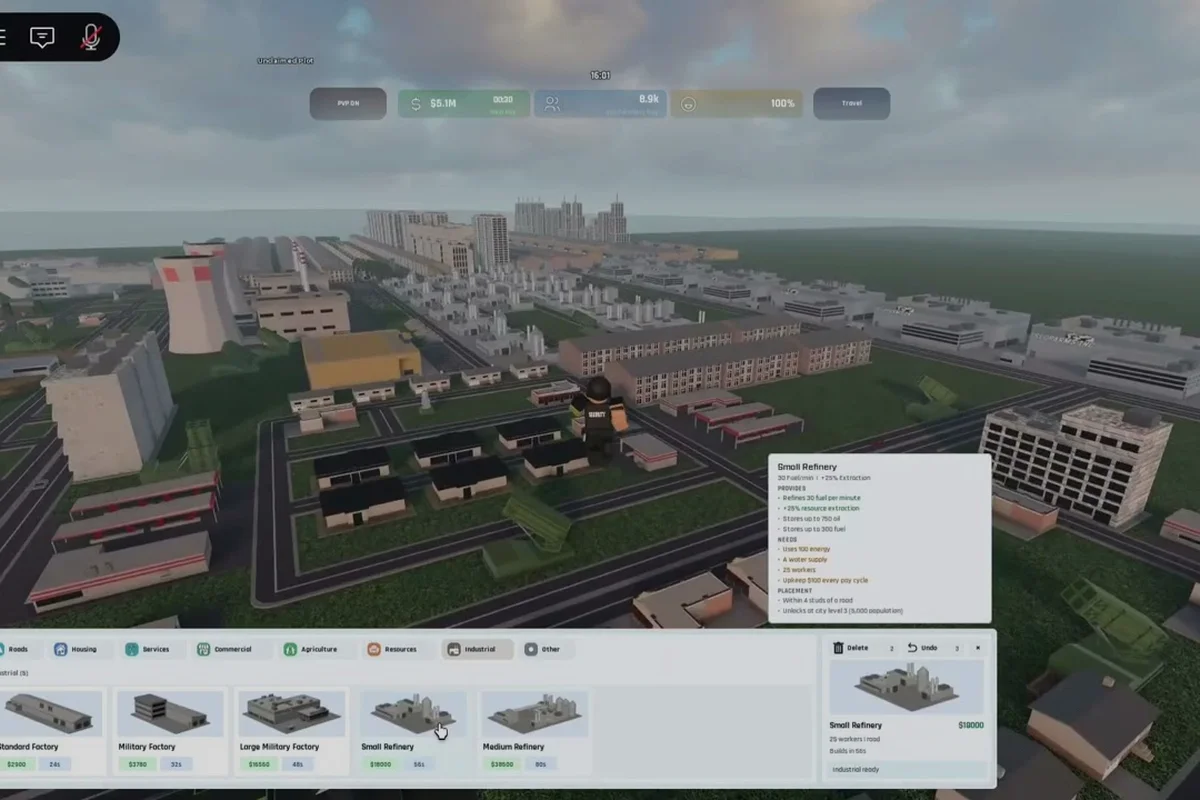
Build and Conquer Fuel Production: Refineries & Power
Boost Build and Conquer fuel production by scaling refinery output, balancing grid demand, and keeping generators online so vehicles stay fueled in the V0.1 beta.
Build and Conquer Power Balance Guide: Grid, Fuel & Water Tips
Balance power, water, and fuel in Build and Conquer by sizing your grid to production demands, prioritizing refineries, and avoiding blackouts during the V0.1 beta.
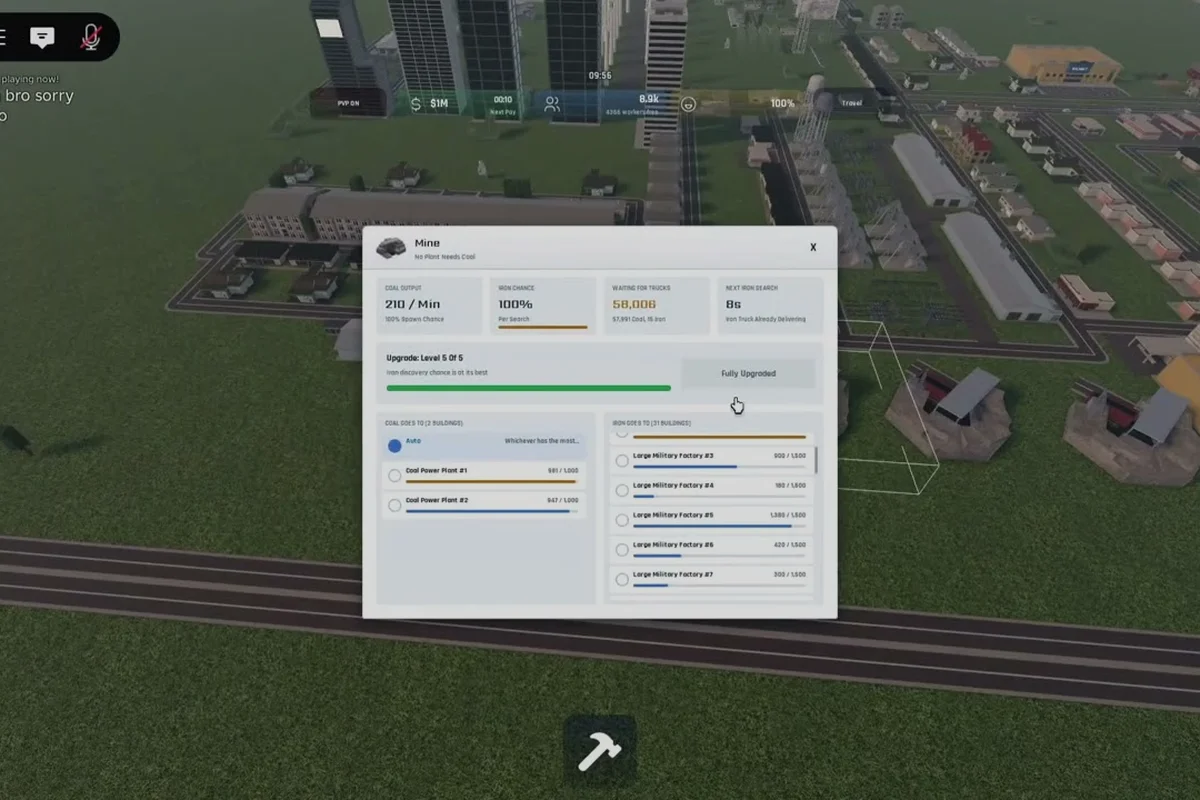
Build and Conquer Steel Factory Guide: Chain & Power
Follow the Build and Conquer steel factory guide to set up the iron-to-steel production chain, meet factory power demands, and supply heavy builds in V0.1 beta.
All Articles
Build and Conquer How to Get Iron: Nodes, Smelting & Steel
Learn how to get iron in Build and Conquer by locating ore nodes, routing transport to smelters, and feeding steel production for factories and military upgrades.
Build and Conquer How to Produce Fuel: Refineries & Storage
Learn how to produce fuel in Build and Conquer, from refinery placement and storage capacity to balancing fuel usage across vehicles and defense systems.
Build and Conquer Industrial Resources: Iron, Steel & Fuel Chain
Compare Build and Conquer industrial resources by yield and efficiency, with farming routes for iron, steel output per factory, and fuel tips for late-game.
Build and Conquer Raw Materials: Iron, Steel, Fuel & Power
Track every Build and Conquer raw material from iron ore and steel ingots to fuel and electricity, with sourcing tips that fix common shortages in V0.1 beta.