
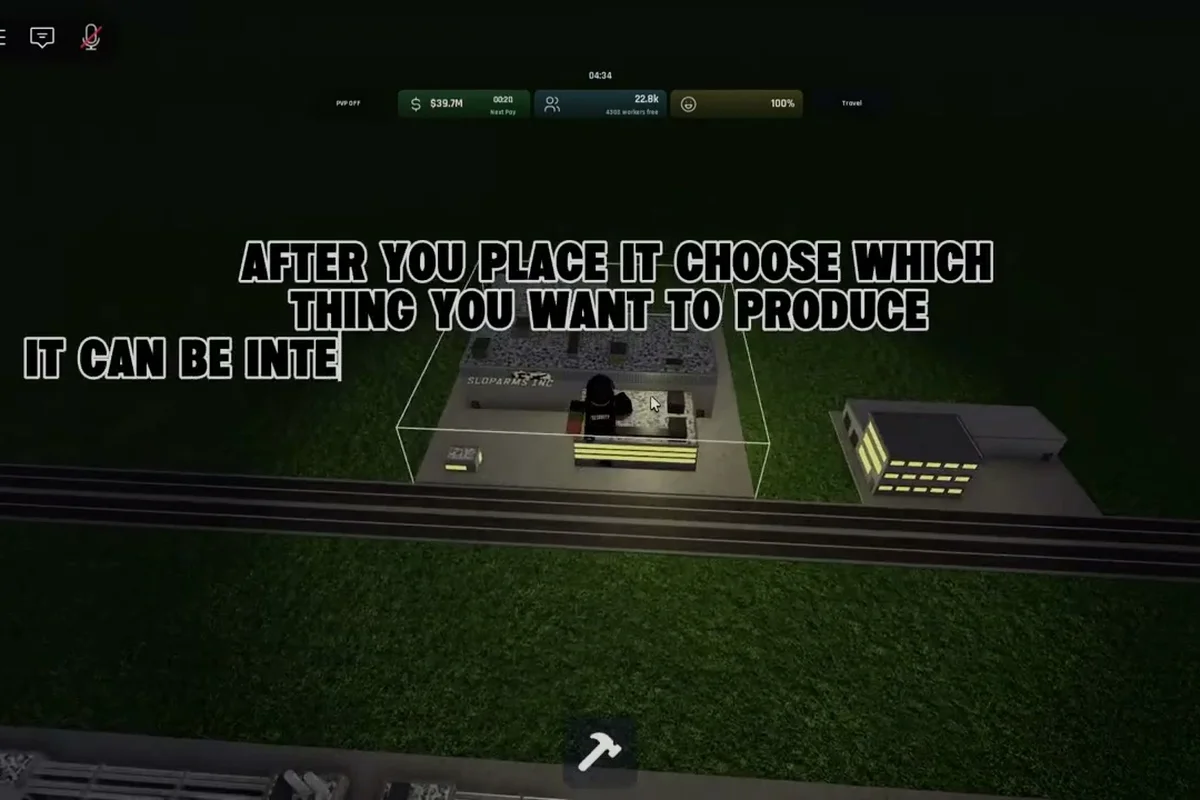
Artillery changes the tempo of a match in Build and Conquer, and the HIMARS system sits at the center of that shift. This Build and Conquer artillery guide breaks down how long-range shelling punishes enemy movement, why ammo logistics decide fights before the first rocket lands, and how to position guns so they survive counterattacks. Understanding the eight-guns-per-squadron conversion is the first step toward turning a static defense into a mobile kill zone. The broader principles in our Build And Conquer Military Guide show how to scale that conversion into full combined-arms offensives.
HIMARS Fundamentals and the Artillery Production Chain
Before any missile leaves the pad, a player needs the Military Base up and running, because every vehicle and missile system in the V0.1 beta flows through that structure. The base acts as the production hub, and without it the HIMARS option never appears in the build menu. Community reports consistently describe the Military Base as the bottleneck that separates early infantry skirmishes from proper combined-arms pushes, which means rushing it too early without an economy to feed it creates a dead building that drains upkeep.
The production chain follows a strict sequence that players often misread. Soldiers unlock at city level 2, and those soldiers form the manpower backbone for crewing guns and holding ground around artillery positions. Once the Military Base is operational, the HIMARS becomes available as a long-range option designed to probe enemy lines and punish movement rather than to win a straight slugfest. The eight guns per squadron rule is community-reported and not published in official unit costs, so treat any specific price tag as unverified until the developer confirms it on the official Roblox page.
The real constraint is not the launcher itself but the ammunition pipeline. A HIMARS squadron that fires constantly will drain supplies faster than most early economies can replace them, which forces a choice between sustained bombardment and burst damage. Players who treat artillery as a fire-and-forget tool usually lose their guns to a tank rush or drone rush within minutes, because the launcher has no meaningful self-defense once infantry support collapses.
| Production Stage | Requirement | Role in Artillery Build | Community Status |
|---|---|---|---|
| Soldiers | City level 2 | Crew guns, hold perimeter | Verified |
| Military Base | Constructed in city | Unlocks vehicles and missiles | Verified |
| HIMARS | Military Base active | Long-range probing and punishment | Verified |
| Eight-gun squadron | Combine eight guns | Standard artillery formation | Community-reported |
The table above shows how each stage locks the next, and skipping a step leaves a player with expensive infrastructure and no way to use it. Ammo production deserves its own planning phase because the HIMARS consumes rockets at a rate that scales with how aggressively the player probes enemy territory.
Positioning HIMARS for Maximum Survivability
Placement decides whether a HIMARS squadron lives long enough to justify its cost. Because the launcher relies on range to stay safe, the ideal position sits behind a natural choke point or a line of friendly infantry that can absorb a counterpush. Players who park artillery directly on the front line lose it to the first anti tank units that roll through, while players who hide it too far back waste rockets on targets outside effective range.
The best positions share three traits: a clear line of sight to likely enemy approach routes, a fallback path that does not cross open ground, and proximity to a resupply point that does not require driving through contested territory. Community footage from the V0.1 beta shows successful artillery players rotating guns after every two or three volleys, because static launchers get triangulated quickly by opponents who watch rocket trails.
Ammo Logistics and the Upkeep Trap
Army upkeep quietly punishes artillery-heavy builds that skip economic development. Every squadron, vehicle, and soldier draws resources over time, and a player who builds five HIMARS squadrons without expanding their treasury discovers that the guns bankrupt the army before the enemy does. The solution is not to avoid artillery but to scale it with production capacity, because a smaller force that can actually fire beats a larger force that sits silent waiting for supplies.
Players report that the most successful artillery builds pair one or two HIMARS squadrons with a strong infantry screen and a modest tank reserve. The tanks do not lead the push; they wait behind the infantry and counterattack when the enemy commits to killing the guns. This layered approach turns the artillery from a primary damage source into a force multiplier that forces the opponent to choose between eating rockets or diving into a prepared kill zone.
Unlocking Tanks and Building a Combined-Arms Response
The question of how to unlock tanks in Build and Conquer ties directly into the Military Base progression, because tanks share the same production hub as the HIMARS. Players who rush the Military Base for artillery often discover that the same building unlocks the core ground force needed to push enemy territory, which means the artillery investment doubles as a tank investment if the economy supports both. The official Roblox game page lists the genre as Strategy with up to eight players per server, and that player count shapes how combined-arms pushes play out in practice.
A tank rush strategy works best when artillery has already softened the target, because tanks that roll into fresh infantry lines without rocket support trade inefficiently. The sequence matters: HIMARS probes enemy positions, forces the opponent to spread out or retreat, and then tanks exploit the gaps. Players who reverse the order and send tanks first usually watch their armor get focused down by anti tank units that had nothing else to shoot at.
| Strategy | Opening Move | Follow-Up | Weakness |
|---|---|---|---|
| Tank rush | Mass tanks, push one lane | Reinforce breakthrough with infantry | Dies to prepared anti tank units |
| Artillery first | HIMARS probes and punishes | Tanks exploit scattered enemy | Requires ammo and patience |
| Drone rush | Fast air units hit backline | Ground forces clean up | Fragile if intercepted early |
| Combined arms | Infantry screens, artillery softens | Tanks counterattack | High upkeep, slow to assemble |
The table highlights why combined arms outperforms single-unit spam in most matches, although a well-executed drone rush can still catch an artillery-heavy player off guard. Drones move fast enough to hit the HIMARS before infantry can reposition, which makes them the natural counter to static gun lines. The counter to that counter is spacing and early warning, because a drone rush loses momentum when the first wave fails to kill a high-value target.
Anti Tank Units and the Defensive Layer
Anti tank units serve two roles in an artillery build: they protect the guns from tank rushes, and they punish opponents who overcommit to killing the HIMARS. The key is placement, because anti tank units need to sit between the artillery and the likely enemy approach path rather than directly on top of the guns. A player who clusters everything in one spot gives the enemy a single target for both rockets and armor, while a player who spreads the defense creates multiple problems that require different answers.
Community reports suggest that anti tank units perform best when they hold fire until tanks commit to a path, because early shots reveal the defensive position and let the opponent route around it. Patience turns a static defense into an ambush, and the artillery provides the bait that makes the ambush work.
Military Research Priorities for Artillery Builds
Military research in Build and Conquer determines how efficiently a player converts resources into combat power, and artillery builds have a specific research order that differs from tank or drone builds. The first priority is anything that reduces ammo consumption or increases rocket damage, because those upgrades directly improve the HIMARS without requiring more guns. The second priority is infantry survivability, since the screen that protects the artillery needs to hold long enough for the guns to do their work.
Players who skip research and rush production often end up with more units than they can afford to upgrade, which creates a mid-game plateau where the army looks big but hits weak. The research tree rewards focus, and an artillery build that spreads research across too many branches loses the efficiency race to a player who specializes.
| Research Priority | Why It Matters for Artillery | Timing |
|---|---|---|
| Ammo efficiency | More rockets per supply run | Before first HIMARS |
| Rocket damage | Fewer volleys to kill targets | After first squadron |
| Infantry survivability | Screen holds longer | Before tank reserve |
| Vehicle speed | Faster repositioning | Late game |
The table shows a research order that supports the artillery playstyle without overcommitting to any single branch. Army upkeep reductions also matter, because every percentage point saved on maintenance translates into more rockets or more infantry over a long match.
The Drone Rush Counterplay
A drone rush punishes artillery builds that skip early warning, because drones cross the map fast enough to hit the HIMARS before ground units can react. The counterplay starts with spacing: guns spread across multiple positions survive a drone strike that would wipe a clustered battery. The second layer is infantry with anti-air capability, although the V0.1 beta does not publish specific unit stats, so treat any exact damage numbers as community-reported.
Players who lose artillery to drones usually make the same mistake: they build guns before they build the screen that protects them. The fix is to delay the second HIMARS squadron until the infantry line can actually hold, because a single squadron with support outperforms two squadrons that die in the first two minutes.
Economic Foundations and the Upkeep Balance
Army upkeep is the silent killer of artillery builds, because every gun, tank, and soldier draws resources whether it fights or not. A player who builds a large army and then stops expanding the economy watches their treasury drain until they cannot afford replacements, which means the army shrinks at the worst possible moment. The solution is to pair every military expansion with an economic expansion, so that upkeep costs never exceed income.
The fastest money method in Build and Conquer matters for artillery players because rockets are expensive, and a player who cannot afford ammo cannot use the HIMARS at all. Economic planning is not a separate skill from military planning; it is the foundation that makes the military plan possible. Players who master the treasury side of the game can afford to trade inefficiently in the short term, because they know the income will replace the losses.
| Economic Action | Military Benefit | Risk |
|---|---|---|
| Expand treasury early | Sustains ammo production | Slower first squadron |
| Build trade routes | Steady income for upkeep | Routes need protection |
| Delay second squadron | Keeps upkeep low | Less firepower early |
| Scale economy with army | Avoids bankruptcy | Requires constant attention |
The table connects economic decisions to military outcomes, because the two systems are inseparable in practice. A player who treats artillery as a pure military problem will eventually run out of rockets, while a player who treats it as an economic problem will always have the supplies to keep firing.
Positioning for the Late Game
Late-game artillery builds face a different challenge than early-game ones, because opponents have had time to build counters and research upgrades. The HIMARS remains valuable as a probing tool, but it can no longer win fights on its own. The late-game role is to force the enemy to react, creating openings for tanks and infantry to exploit.
Players who keep their guns alive through the mid-game transition into a support role where the artillery punishes any enemy unit that stops moving. A stationary tank line eats rockets until it moves, and a moving tank line loses its defensive bonus and becomes vulnerable to the player's own armor. This dynamic keeps the HIMARS relevant even when it no longer deals the killing blow.
Frequently Asked Questions
How do I unlock tanks in Build and Conquer?
Tanks unlock through the Military Base, which is the same production hub required for HIMARS and other vehicles. Build the Military Base first, then produce tanks as your economy allows. The exact cost is not published in the V0.1 beta, so treat any specific number as community-reported until confirmed by the developer.
What is the best way to counter a tank rush?
A tank rush dies to prepared anti tank units positioned between the artillery and the likely approach path. Hold fire until the tanks commit to a route, then hit them from multiple angles. Artillery support softens the rush before it arrives, which forces the opponent to choose between retreating or losing armor.
How does army upkeep affect artillery builds?
Army upkeep drains resources from every unit whether it fights or not, so artillery-heavy builds need a strong economy to sustain ammo production and replacements. Scale military expansion with economic expansion, and avoid building more squadrons than your income can support.
What is the drone rush counterplay for artillery players?
A drone rush counters artillery by hitting the guns before ground units can react. Spread guns across multiple positions, build infantry screens with anti-air capability, and delay the second HIMARS squadron until the defensive line can actually hold. Early warning and spacing beat raw firepower against fast air units.
Is the eight-guns-per-squadron rule confirmed?
The eight guns per squadron conversion is community-reported and not published in official unit costs. It appears in verified beta footage, but treat it as subject to change until the developer confirms it on the official Roblox page. Cross-check any numeric claim against the latest patch notes before relying on it.